


More Than Just A Pet: Why Our Animals Are Essential to Life

At Don't Forget My Pet, our tagline is simple: "I'm more than just a pet." It isn't just a slogan — it's the truth we see lived out every single day in our community. Pets are companions, anchors, and lifelines.
They are the reason people get out of bed on difficult mornings, the source of comfort in hospital waiting rooms, and the soft, warm presence that makes a quiet house feel less empty.
Our founder, Alysha, discovered this firsthand during the COVID-19 lockdowns. Moving from Melbourne to Geelong between the first two lockdowns — knowing no one, cut off from every support network — she found herself relying on her dog, Digga, for something no policy paper had accounted for: genuine human-animal connection. Digga helped her meet people, build friendships, and hold onto her mental health through one of the most isolating periods in recent memory.
"Digga was so good for my mental and physical health during COVID — and the thought of people being forced to be without their pets broke my heart." — Alysha, Founder, Don't Forget My Pet Foundation
That personal experience became the spark for a charity. But it also points to something larger that research, healthcare providers, and ordinary Australians all confirm: pets matter in ways we're only beginning to fully understand.
The Science Is Clear
The health benefits of companion animals are well-documented. Interacting with animals reduces cortisol — the primary stress hormone in the body — and lowers blood pressure. They reduce loneliness, increase feelings of social support, and boost mood in ways that directly lower the risk of developing mental health conditions. For people living with dementia, anxiety, disability, or chronic illness, a pet can be as important as any prescribed therapy.

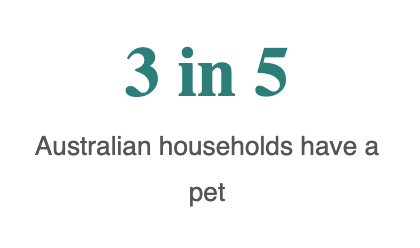

These aren't abstract figures. They represent real people — older Australians living independently, people recovering from surgery, individuals navigating mental health crises — for whom a cat, dog, or bird is their most consistent source of daily connection. And yet, when life becomes difficult, it is often the animal who pays the price.
When People Are Vulnerable, Pets Are at Risk Too
Here's the part that doesn't make the headlines: when people face a crisis — hospitalisation, financial hardship, family violence, aging — their pets often have nowhere to go. Rescue services have told our team that a large number of animal surrenders come from people over the age of 65 who simply can no longer manage alone. Healthcare providers have shared that patients will delay critical medical treatment out of fear their animals won't be cared for in their absence.
There is currently no provision in Australian Home Care Packages for the care of a person's animal. That means an older person receiving support to stay at home may have help with cooking, cleaning, and transport — but nothing for their dog's daily walk or their cat's vet visit. The gap is glaring, and the human cost is real.
Looking Ahead: Australia's Aging Population
By 2050, the number of Australians aged 65–84 is expected to double, with people over 85 projected to more than quadruple to 1.8 million. As our population ages, the relationship between older Australians and their pets will only grow more important — and the need for services that honour that bond will grow with it.


Comments